|
||||
|
|
|
|||
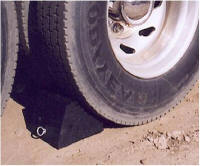
Check yourself to see that wheels are chocked
|
Ensure that truck and trailer brakes are set and wheels are blocked. Trailers not hooked to a tractor at a dock should be secured by trailer jacks or sufficient support. |
|||
|
|
||||
|
Watch for holes or weak floors.
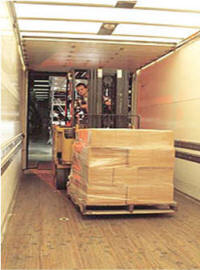
Watch for trash, loose objects and obstructions. Inspect condition of truck or trailer before entering. Ensure the floors will support the combined weight of the forklift and the load. |
Always observe the condition of the trailer before entering
![]() |
|||
|
|
||||
|
|
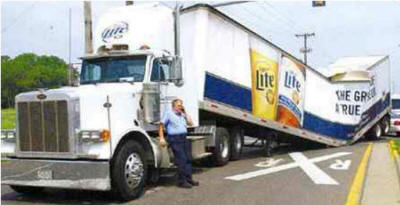
Even Lite loads can add up Never Overload Any Trailer
|
|||
|
|
||||
|
Do not allow pedestrians in trailers while a lift truck is loading or unloading. The likelihood of being crushed by a forklift is greater in tight spaces. Ensure proper lighting in trailer and work area. |
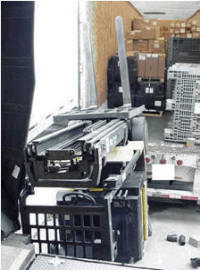
Avoid the pitfalls of an unstable or overweight load![]() ![]() |
|||
|
|
||||
|
|
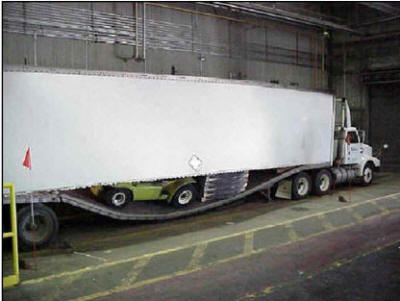
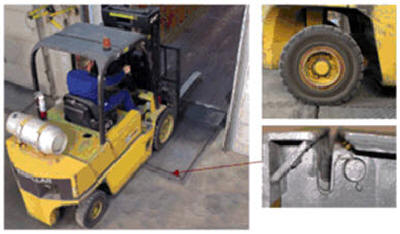
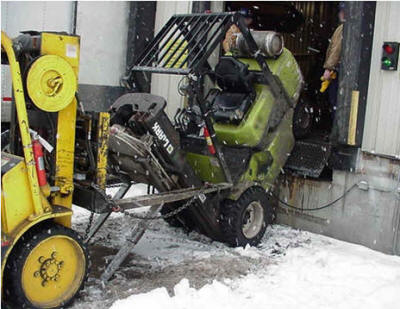
Never park a forklift on a dock plate. Ensure that portable dock plates are properly secured before driving over. Ensure plate capacity is capable of supporting forklift and load. Dock levellers must be extended and securely resting on trailer floor. |
|||
|
|
||||
|
Install anti-slipping
material in any area that could be a hazard
due to weather conditions. Ensure that docks and dock plates are clear of obstructions and not oily, wet or coated with ice or snow. Know where to find safety salt, ice melter or oil absorbent. |
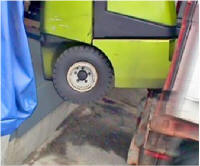
Have a policy in place to prevent truck pulling out prematurely![]() |
|||
Prepare dock for inclement weather conditions and slippage from water snow and ice |
||||
|
|
||||